



Dilip Kumar Dasgupta School for Displaced Children (DKDS)
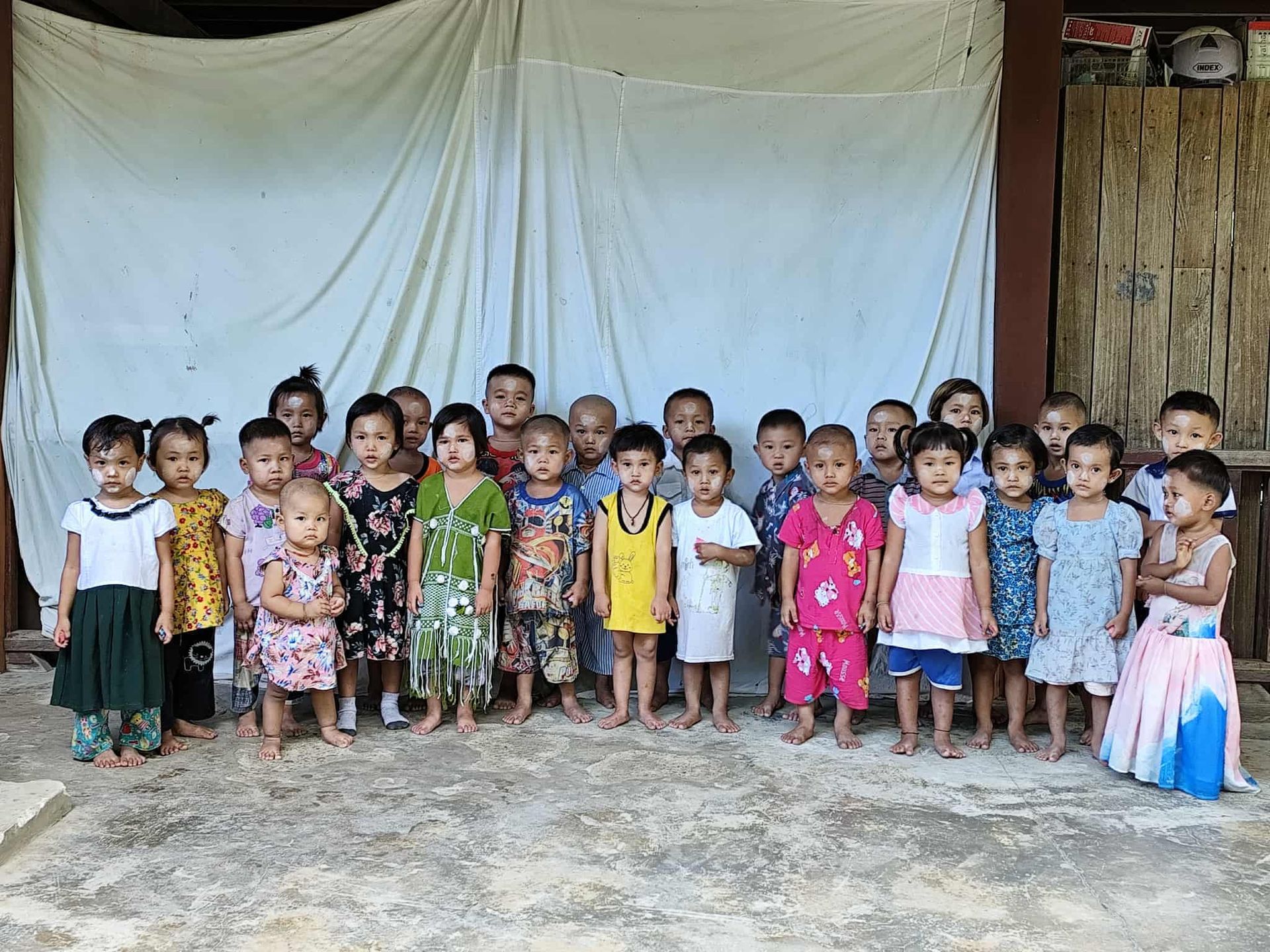
The only early childhood learning space in Myine Tha Yar Village gives 38 children, including 4 orphans, a safe place to learn and be cared for every day.
Budget
€8.581
฿328.424
per year
Partner
Baan Unrak Foundation
Timeline
PCF funding support begins December 2025.
The Dilip Kumar Dasgupta School (DKDS) is the only early childhood learning space in Myine Tha Yar Village, a conflict-affected community about an hour from the Myanmar–Thailand border. Established in 2015, the school gives 38 children aged 2 to 5, including 4 orphans, a safe place to learn, eat, and be cared for each day, taught by three dedicated teachers who also manage cooking, gardening, and school upkeep. Continued support covers teacher stipends, food, training, and learning materials, ensuring these children keep the foundation they need for future schooling.
The project's roots go back to 1984, when construction of the Khao Laem Dam submerged hundreds of square kilometres of land in Kanchanaburi Province, displacing entire villages and destroying homes and farmland. Around the same time, Karen families were fleeing violence in Myanmar and crossing the border into Thailand with nothing. When Baan Unrak's founder arrived in Sangkhlaburi and witnessed this hardship firsthand, she began collecting and delivering food, blankets, medicine, soap, and clothing between Sangkhlaburi and Bangkok, the beginning of what is now nearly 35 years of continuous humanitarian support in the region.
Many families in these remote communities still face poverty, food insecurity, disability, and chronic health problems, made worse by geographic isolation that limits access to basic supplies and medical care. Elderly people, widows, and parents raising young children alone are especially at risk.
Today, the project reaches 32 households through monthly deliveries of rice, oil, beans, and other food staples alongside hygiene items such as soap, shampoo, and detergent. Trained outreach staff, several of whom grew up at Baan Unrak themselves, conduct home visits to assess each household's needs, connect people to medical referrals and counselling, and prioritise those most at risk. This continuity of local, culturally grounded relationships is central to how the project works.
Provide safe, stable, and developmentally appropriate early childhood education for young children in Myine Tha Yar village.
- Ensure all 38 children aged 2–5 receive daily early childhood education, care, and nutrition throughout the nine-month school year, with at least 90% regular attendance.
- Provide full educational and welfare support to the four orphaned children, including continuous learning, nutrition, and safe caregiving.
- Strengthen teaching quality through monthly stipends, coaching, and monitoring for all three teachers, aiming for zero teacher turnover during the project year.
- Achieve measurable progress for at least 80% of students in early language, motor skills, social interaction, and emotional development by the end of the academic cycle.
- Maintain a clean, safe, and nurturing environment, with 100% of children taking part in daily hygiene routines.
41 direct beneficiaries: 38 children aged 2–5 (23 boys, 15 girls, including 4 orphans) and 3 teachers.
Ethnicity breakdown (children only, 38 total):
- Karen: 71% (27 children)
- Mixed ethnicity: 21% (8 children)
- Burmese: 8% (3 children)
111 indirect beneficiaries: 3 additional family members each for 34 students, plus 3 additional family members each for the 3 teachers.
Support Our Projects
Every donation goes directly to the communities we serve.
PCF reports every baht spent.


